

What Happens After Dental Implant Surgery?

Dr. D.Sendhil Nathan
MDS, DNB (Prosthodontics And Implantology)
Getting a dental implant is a big step toward restoring a missing tooth, and the weeks after surgery shape how well it turns out. Most patients want to know the same things. Will it hurt? How long will the swelling last? When can I eat normally, and when will the new tooth be fitted?
Once the implant is placed, your gums start to close over the area while the jawbone slowly grows around the implant post. The early soreness usually settles within a week or two, but the deeper bone healing takes several months. Knowing what is normal at each stage helps you look after the area and spot anything that needs attention.
Table of Contents
The First 48 Hours
Once the numbing wears off, expect some tenderness around the implant. Mild bleeding or oozing, puffiness in the cheek and light bruising are also common. Swelling typically builds for the first two to three days before it starts to go down.
To protect the area during this time:
- Rest, and avoid heavy exercise or lifting.
- Bite gently on the gauze for as long as your dentist has advised, usually about half an hour to an hour.
- Hold a cold pack, wrapped in a cloth, against your cheek in short intervals.
- Take pain relief and any antibiotics exactly as prescribed.
- Skip straws, forceful rinsing and repeated spitting for the first day, as these can disturb the clot.
The Healing Timeline
Days 3 to 7: Swelling begins to ease, though bruising may look more noticeable before it fades. Eating, speaking and daily routines start to feel easier. Keep avoiding pressure on the site.
Weeks 1 to 2: The gum tissue closes around the surgical area and discomfort becomes mild. Dissolvable stitches break down on their own. Otherwise, your dentist removes them at a review visit, usually within one to two weeks.
Weeks 3 to 12: From the outside, the area looks and feels normal, and most people forget about it. Beneath the gum, the bone is quietly strengthening around the implant. This is the stage when many patients are tempted to chew on that side, so keep following your dentist’s guidance on diet.
Months 3 to 6: This is when osseointegration is completed, meaning the jawbone fuses with the implant surface and holds it firmly in place. Timing varies with bone quality, the implant’s position and whether a bone graft was needed.
When Will You Get Your New Tooth?
For most conventional treatments, the final tooth is fitted after the implant has bonded with the bone, typically around three to six months after placement. Some cases allow a temporary tooth earlier, but that is only a stand-in. It doesn’t mean the implant is fully healed.
The final stage usually looks like this:
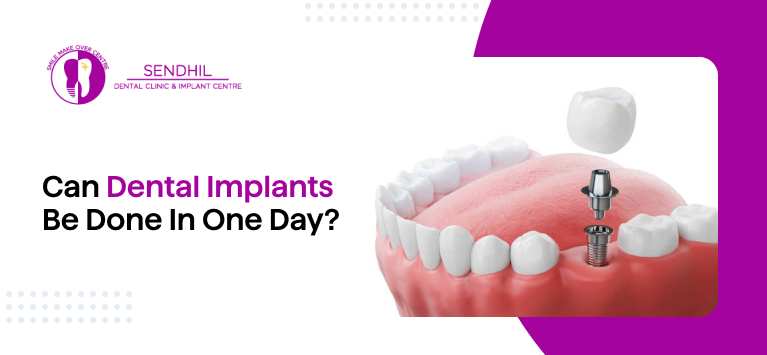
- Abutment placement. A small connector is attached to the implant. Sometimes this is done at the first surgery. Otherwise it is a short, minor procedure.
- Gum healing. The gums need about two weeks to settle around the abutment.
- Impressions. Your dentist takes measurements so the crown matches your bite and neighbouring teeth.
- Crown fitting. The finished crown is screwed or cemented onto the abutment.
What to Eat While You Heal
For the first few days, choose soft, cool or lukewarm foods that need almost no chewing:
- Curd, yoghurt and soft porridge
- Soft idli, well-cooked rice and khichdi
- Mashed potatoes and mashed vegetables
- Blended soups and smoothies
Stay away from hot, spicy, crunchy or sticky foods, and try not to chew near the implant. You can return to your regular diet gradually, as your dentist advises.
Warning Signs: When to Call Your Dentist
- Pain or swelling that keeps worsening instead of settling, especially after the first few days
- Heavy bleeding that doesn’t stop with pressure from gauze
- Pus, a foul taste or a bad smell from the area
- Fever or chills
- Numbness in the lip, chin or tongue that doesn’t fade
- Any looseness or movement of the implant
Final Thoughts
The first few days are about managing tenderness and letting the gums settle. The following months are about patience while the bone bonds with the implant. Following your aftercare instructions and attending every review visit gives your implant the best chance of lasting.
At Sendhil Dental Clinic & Implant Centre, Chennai, we assess each patient individually and explain the healing period, aftercare and appointments for their treatment plan. If you are considering an implant, or you notice anything unusual after surgery, book a consultation with us and our team will guide you.