





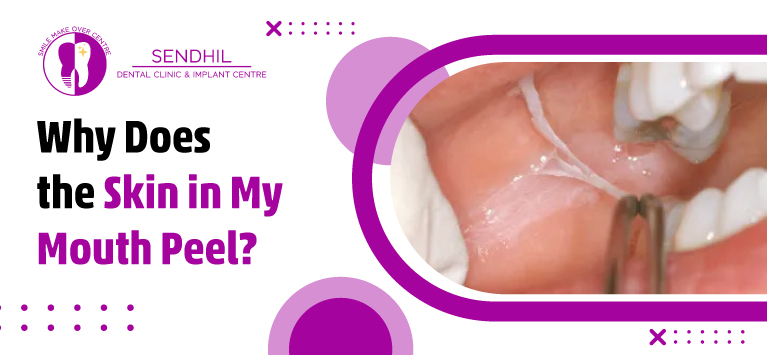
Why Does the Skin in My Mouth Peel?

Dr. D.Sendhil Nathan
MDS, DNB (Prosthodontics And Implantology)
Have you ever noticed a thin layer of skin peeling inside your mouth or on the inside of your cheek? You may wonder, “Why is the skin inside my mouth peeling?”
In many cases, peeling inside the mouth is temporary and may occur because of irritation from hot food, certain toothpaste ingredients, cheek biting, or other minor causes. However, persistent or recurring peeling may sometimes be linked to allergies, infections, nutritional deficiencies, or other oral health conditions.
The inside of your mouth is covered by a delicate lining called the oral mucosa. This tissue is constantly exposed to food, drinks, toothpaste, and other substances. As a result, it can occasionally become irritated and peel.
Table of Contents
What Is the Skin Inside Your Mouth?
The soft tissue lining the inside of your cheeks, lips, gums, tongue, and other areas of your mouth is known as the oral mucosa. It helps protect the underlying tissues and plays an important role in maintaining a healthy oral environment.
Unlike the skin on the outside of your body, the oral mucosa is delicate and can be affected by heat, friction, chemicals, allergens, and infections. When this tissue becomes irritated or damaged, you may notice a thin layer of white or transparent tissue peeling away.
Sometimes, this may happen only once and resolve on its own. However, if the peeling continues or occurs along with other symptoms, it may require professional evaluation.
Common Causes of Skin Peeling Inside the Mouth
Hot Food and Drinks
One common reason for peeling inside the mouth is exposure to very hot food or beverages. Drinking extremely hot tea, coffee, or other beverages can irritate or burn the oral mucosa.
A mild burn may cause the affected tissue to become tender or peel over the following days. In some cases, repeated exposure to hot foods or drinks may also contribute to painful sores or ulcers.
Irritation from Toothpaste or Mouthwash
Certain ingredients in oral care products may irritate the sensitive tissues inside the mouth. Some people may experience irritation or peeling due to ingredients such as sodium lauryl sulfate (SLS), flavouring agents, or other components in toothpaste or mouthwash.
If you notice that the peeling started after switching to a new toothpaste or mouthwash, consider discussing the issue with your dentist. They may suggest trying a milder oral care product.
Hot, Spicy, or Acidic Foods
Certain foods and drinks may irritate the oral mucosa, especially if your mouth is already sensitive.
Common triggers may include:
- Very spicy foods
- Citrus fruits
- Acidic beverages
- Carbonated drinks
- Very salty foods
If you notice that the peeling occurs after eating certain foods, try avoiding those foods temporarily and observe whether your symptoms improve.
Accidental Cheek Biting or Other Trauma
Repeatedly biting the inside of your cheek can damage the oral mucosa. This may happen accidentally while eating or as a result of habits such as chewing on pens, pencils, or other objects.
Braces, sharp teeth, broken fillings, or rough dental restorations can also repeatedly rub against the inside of the cheek and cause irritation.
Allergic Reactions
An allergic reaction or sensitivity to certain foods, medications, toothpaste ingredients, mouthwashes, or other oral care products may sometimes cause irritation and peeling inside the mouth.
Other symptoms may include:
- Redness
- Burning or tingling
- Swelling
- Itching
- Soreness
If you suspect that a particular product or food is causing the problem, speak with a healthcare professional or dentist before making significant changes to your treatment or diet.
Dry Mouth
Insufficient saliva can make the tissues inside your mouth more vulnerable to irritation.
Dry mouth may occur because of:
- Dehydration
- Certain medications
- Mouth breathing
- Some medical conditions
- Reduced saliva production
When your mouth becomes dry, the oral tissues may feel uncomfortable, irritated, or more sensitive. Drinking enough water throughout the day may help support normal moisture levels in the mouth.
Inflammatory or Autoimmune Conditions
In some cases, persistent peeling or changes in the oral mucosa may be associated with inflammatory or autoimmune conditions. For example, conditions such as oral lichen planus can cause changes in the lining of the mouth, including white patches, soreness, or irritated areas.
These conditions require professional diagnosis. If the peeling is persistent, recurring, or accompanied by other unusual changes, consult a dentist.
Nutritional Deficiencies
Certain nutritional deficiencies may affect oral health. Deficiencies involving nutrients such as iron or some B vitamins may sometimes be associated with oral symptoms.
However, it is important not to assume that peeling inside the mouth is caused by a vitamin deficiency without proper evaluation. A healthcare professional may recommend appropriate testing if a deficiency is suspected.
Oral Thrush
Oral thrush is a fungal infection caused by an overgrowth of Candida in the mouth. It may cause white or creamy patches on the tongue, cheeks, gums, or other areas. Some people may notice soreness, redness, burning, or tissue changes along with these patches.
If you notice persistent white patches or peeling inside your mouth, especially along with discomfort, it is important to have the area examined by a dental professional.
Is Skin Peeling Inside the Mouth Normal?
Occasional peeling may occur because of minor irritation, a mild burn, or accidental trauma and may improve within a short period of time. However, persistent or recurring peeling should not be ignored.
You should consider seeing a dentist if the peeling:
- Continues for more than a couple of weeks
- Keeps coming back
- Causes significant pain or burning
- Occurs with persistent ulcers
- Is accompanied by white or red patches
- Causes swelling or bleeding
- Makes eating or drinking difficult
- Appears without an obvious cause
How to Stop Skin Peeling Inside the Mouth
The appropriate treatment depends on the cause. However, the following steps may help reduce irritation:
Stay Hydrated
Drink enough water throughout the day, especially if you experience dry mouth.
Avoid Very Hot Foods and Drinks
Allow hot food and beverages to cool before consuming them to reduce the risk of irritating the oral tissues.
Avoid Known Irritants
If certain spicy, acidic, or other foods seem to trigger irritation, try avoiding them temporarily.
Review Your Oral Care Products
If the peeling began after using a new toothpaste or mouthwash, speak with your dentist about whether another product may be more suitable for you.
Maintain Good Oral Hygiene
Continue brushing and flossing regularly, but be gentle around irritated areas. Avoid aggressive brushing or scrubbing the affected tissue
Avoid Biting or Irritating the Area
Try to avoid cheek biting and habits such as chewing on pens or pencils. If a sharp tooth, filling, or dental appliance is irritating the area, consult your dentist.
Avoid Self-Diagnosing or Taking Unnecessary Supplements
Peeling inside the mouth can have several possible causes. Taking supplements or using medication without knowing the underlying cause may not solve the problem. If the condition persists, professional evaluation is the safest approach.
When Should You See a Dentist?
You should consult a dentist if the skin inside your mouth continues to peel, frequently returns, or is associated with other symptoms.
A dental examination can help identify whether the problem is related to irritation, an oral care product, an infection, a dental issue, or another underlying condition. Early evaluation can also help ensure that persistent changes in the oral tissues receive appropriate attention.
Final Thoughts
Occasional peeling inside the mouth may occur due to minor irritation, hot foods or drinks, certain oral care products, or accidental trauma. In many cases, the issue improves once the underlying irritant is removed.
However, persistent or recurring peeling should not be ignored. If the peeling is accompanied by pain, ulcers, white or red patches, swelling, bleeding, or other unusual changes, consult a dentist for proper evaluation.
Identifying the underlying cause is important for receiving the right treatment and maintaining good oral health.


