

Root Canal vs Tooth Extraction: Which Is Better for a Damaged Tooth?

Medically Reviewed by
Dr. D.Sendhil Nathan
MDS, DNB (Prosthodontics And Implantology)
TNDC Reg No - 5709
A badly damaged tooth can leave you wondering whether it is worth saving or better to remove it. The answer isn’t always straightforward. While some teeth can be treated and retained, others may be too damaged to restore successfully.
Before deciding, it helps to understand what each treatment involves, when your dentist might recommend it, and what you may need afterwards.
Table of Contents
Root Canal vs Tooth Extraction
A root canal treats infection inside a tooth while keeping the natural tooth in place. Tooth extraction, on the other hand, involves removing the entire tooth when it cannot be repaired reliably.
The choice depends on the extent of the damage, the amount of healthy tooth structure remaining and the condition of the surrounding gums and bone.
When Is a Root Canal Needed?
Deep decay or an injury can damage the pulp inside a tooth. When this happens, root canal treatment may help preserve the tooth without removing it.
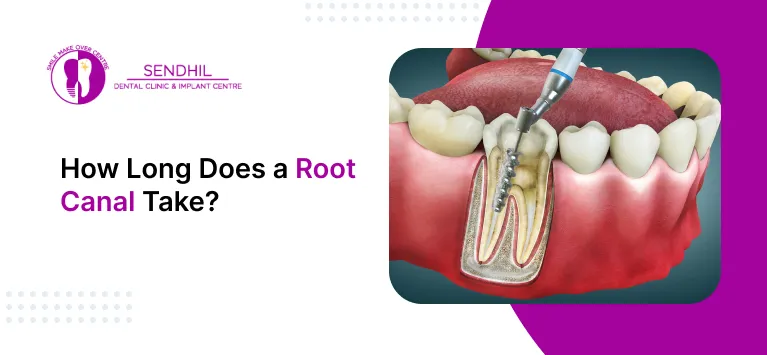
During the procedure, the dentist removes the affected pulp, cleans the canals and seals them. A crown may be recommended afterwards to protect the remaining tooth, depending on its condition.
Keeping your natural tooth allows you to continue using it for chewing without immediately needing a replacement. However, the tooth must have enough healthy structure to support the restoration. If the damage is too extensive, a root canal may not provide a lasting result.
When Is Tooth Extraction Necessary?
Extraction may be recommended when a tooth has extensive damage, a severe fracture or insufficient support from the surrounding bone and gums. In such cases, attempting to restore it may not produce a reliable outcome.
After removal, the area needs time to heal. Depending on the location of the missing tooth and your dental condition, your dentist may discuss replacing it with an implant, bridge or denture.
A missing tooth can affect chewing, and neighbouring teeth may gradually shift into the space. Whether replacement is needed depends on your individual circumstances, so it is worth discussing this before treatment.
Cost and Recovery
The cost of a root canal depends on the tooth being treated and whether a crown is required. Extraction may cost less initially, but replacing the missing tooth can increase the overall expense.
Both procedures are generally performed under local anaesthesia. Some discomfort may occur afterwards, and recovery varies depending on the treatment and the original dental problem. Your dentist can explain the expected healing process and aftercare for your case.
Root Canal vs Tooth Extraction: Comparison
Root Canal | Tooth Extraction | |
| Purpose | Treats infection while preserving the tooth | Removes a tooth that cannot be restored reliably |
Natural tooth | Retained after treatment | Removed completely |
Further treatment | A crown may be needed | A replacement may be considered |
Initial cost | Depends on treatment and restoration | Depends on the complexity of extraction |
Long-term care | The treated tooth needs regular care | The gap and any replacement may need follow-up |
Which Treatment Is Better?
If your tooth can be restored successfully, a root canal may be the preferred option because it preserves the natural tooth. If the damage is too extensive, extraction may be more appropriate.
The best decision comes from understanding the condition of your tooth and the likely outcome of each treatment. At Sendhil Dental Clinic & Implant Centre, a dental examination can help you explore the available options and choose a treatment suited to your oral health needs.